Concrete Masonry Blocks Explained: Types, Uses, and How to Pick the Right One
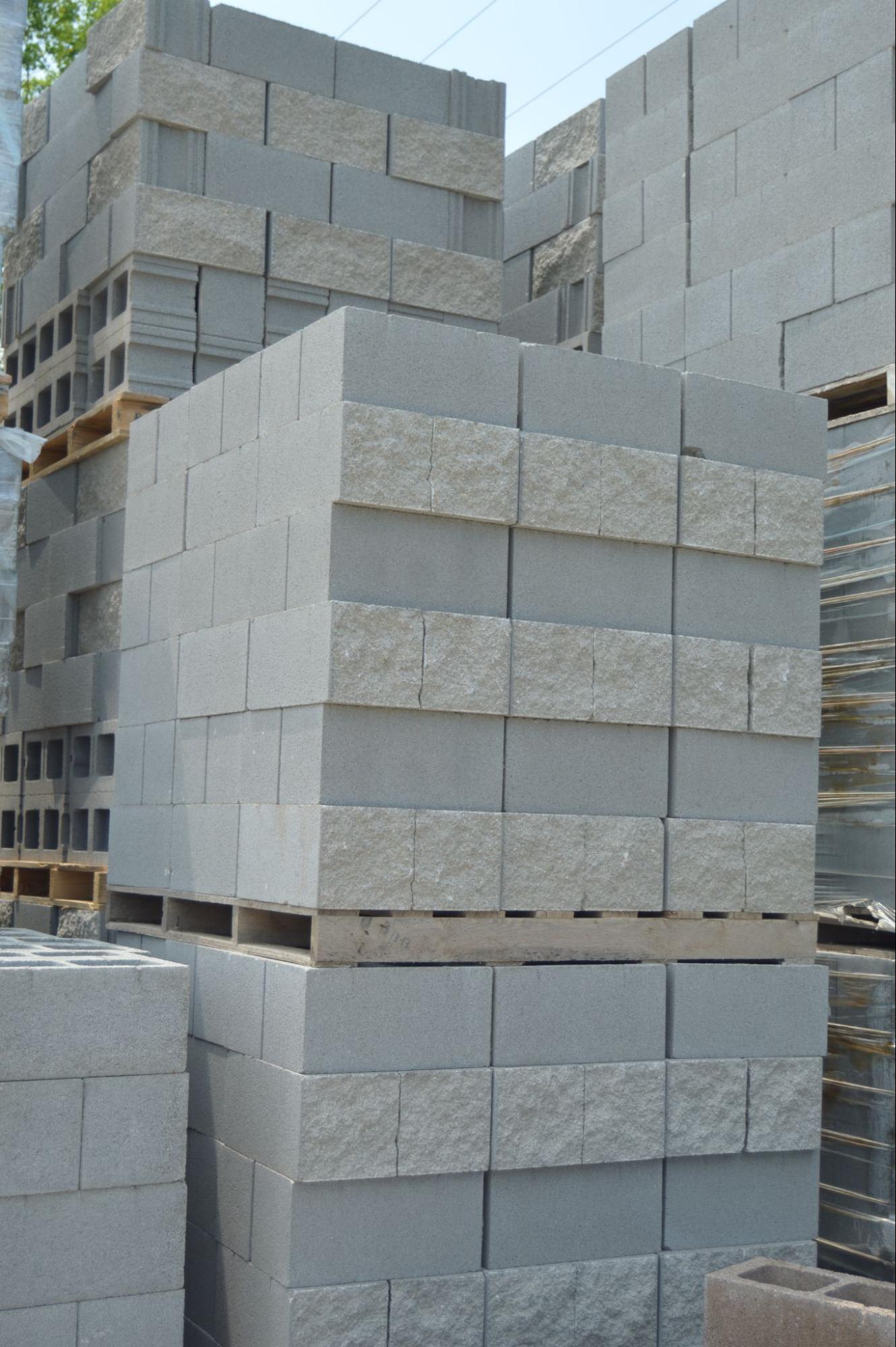
Concrete masonry blocks all look roughly the same when they are stacked on a pallet. Gray, rectangular, heavy. That similarity is exactly what trips people up. A block meant for a load-bearing basement wall and a block meant for a decorative garden border are not the same product, and using the wrong one shows up later as a cracked wall, a failed inspection, or a job that has to be torn out and redone.
Here is a plain English guide to what concrete masonry blocks actually are, the types you will encounter, and the questions that will get you to the right one on the first trip.
What a concrete masonry block actually is
A concrete masonry block, often called a CMU or simply a block, is a precast unit made from cement, water, and aggregate, formed under pressure and cured to a specified strength. Load-bearing units are manufactured to ASTM C90, which sets minimums for compressive strength, absorption, and dimensional tolerance. That standard is why a block from a reputable masonry supply store performs predictably on a wall and a random secondhand block does not.
Blocks come hollow or solid. Hollow units, the familiar two-cell block, are lighter to handle and, more importantly, allow you to run vertical rebar through the cells and fill them with grout. That combination of block, steel, and grout is what turns a stack of masonry into a structural wall.
Nominal size versus actual size
This confuses more first-time builders than anything else. A standard block is described as 8 by 8 by 16, but if you measure one, it comes out to 7 5/8 by 7 5/8 by 15 5/8. The missing 3/8 inch on each dimension is the mortar joint. When the block is laid with a standard joint, it occupies a full 8 by 16 space in the wall.
This matters for planning. Design your wall in multiples of 8 inches vertically and 16 inches horizontally, and you will cut very few blocks. Ignore it, and you will spend a Saturday with a saw.
Blocks are commonly available in 4, 6, 8, 10, and 12 inch widths. The 8 inch block is the workhorse for foundations, garages, and general construction. The 4 and 6 inch units suit partition walls and lighter work. The 10 and 12 inch units come out when walls are tall, when soil pressure is high, or when an engineer calls for them.
The common types and what each one is for
Stretcher block. The standard unit with flanged ends, used for the bulk of any wall. Most of what you buy will be stretchers.
Corner or end block. One flat end so the finished edge looks clean at corners, door jambs, and window openings.
Half block. Runs half the length of a stretcher and keeps your running bond pattern correct at the ends of courses without cutting.
Bond beam block. The web is lowered or knocked out so horizontal rebar can run continuously through the course. Bond beams reinforce a wall against lateral movement and are standard at the top of walls and above openings.
Lintel block. A U-shaped unit that carries the load over doors and windows. Reinforced and grouted, it spans the opening.
Column or pilaster block. Designed to stack into piers and columns, often with a full open core for a rebar cage and grout.
Sash block. A vertical groove in the end accepts window or door frames and jamb sealant.
Solid and cap block. No cores. Used for the top course, for pier caps, and where a full bearing surface is needed.
Split face and architectural block. Split after curing to expose the aggregate, giving a rough stone look. Common on commercial facades and feature walls where the block is the finished surface.
Weight classes matter more than people think
Blocks are classified as normal weight, medium weight, or lightweight depending on the density of the aggregate. A standard 8-inch normal weight block runs around 35 to 38 pounds. A lightweight unit of the same size can be closer to 28 pounds.
On a wall of a few hundred blocks, that difference adds up in real fatigue and real labor hours. Normal weight units generally offer better sound blocking and higher compressive strength. Lightweight units are easier to handle and offer better insulating value. For a below-grade foundation, weight and strength usually win. For an interior partition on the second floor, lighter is often the smarter call.
Choosing the right block: five questions
- Is the wall carrying a load? If the wall supports a roof, floor, or anything above it, you need load-bearing units meeting ASTM C90, and you almost certainly need reinforcement and grout. Non-load-bearing partitions and decorative walls have more flexibility.
- Is any part of it below grade? Below-grade walls face soil pressure and constant moisture. That points to 8-inch units at minimum, vertical rebar with grouted cells, type S or type M mortar, and proper drainage and waterproofing on the exterior face.
- What will the weather do to it? The Ohio and West Virginia freeze-and-thaw cycle is hard on masonry. Water gets into a wall, freezes, expands, and works joints apart over several winters. Good drainage, correct mortar, capped tops, and proper flashing matter as much as the block you choose.
- Will the block be visible? If the wall is getting stucco, veneer, or backfill, standard gray block is the economical answer. If the block is the finished look, split face or architectural units are worth the difference in cost.
- What does the plan or code require? Engineered drawings and local building codes will often specify block width, strength, mortar type, and reinforcement schedule. Follow them. Substituting a lighter or narrower block to save money is the most expensive shortcut in masonry.
Estimating how many blocks you need
For standard 8 by 16 nominal face blocks, figure roughly 112.5 blocks per 100 square feet of wall. Measure your wall length times height in feet, multiply by 1.125, then subtract openings and add about five percent for breakage and cuts.
For mortar, a common rule of thumb is one bag per 25 to 30 blocks, though it varies with joint size and how much you waste. Add rebar, grout, wall ties, and any lintel or bond beam units to the list before you order rather than after you start.
Mistakes worth avoiding
Skipping the footing or pouring one too shallow for local frost depth. Laying block on damp ground without drainage. Using type N mortar below grade where type S or M belongs. Leaving cells ungrouted where the plan calls for reinforcement. Forgetting bond beam and lintel units until the wall is halfway up. Every one of these is easy to prevent at the planning stage and expensive to fix afterward.
Talk it through before you order
Pioneer Masonry Supply has been the region’s masonry supply store for more than 40 years, stocking concrete masonry blocks in the sizes, shapes, and strengths that local projects call for, plus the brick, mortar, cement, aggregates, and steel reinforcement that go with them. Our staff has helped homeowners and contractors work through everything from a backyard retaining wall to a full commercial build, and we are glad to help you check quantities before you buy.
Bring your plans or measurements to our Parkersburg store at 1400 Blizzard Dr or call 304-422-4050. In Ohio, visit our Marietta store at 220 Acme St or call 740-373-1133. We deliver throughout Parkersburg, Marietta, Williamstown, Ripley, Athens, and the surrounding areas.
Frequently Asked Questions
What sizes of concrete masonry blocks do you carry? We stock multiple block widths and strengths for residential and commercial work, including standard stretchers, corner units, half blocks, bond beam and lintel units, and cap blocks. If your project calls for something specific, our team can source it.
How many blocks do I need for my wall? For standard 8 by 16 nominal blocks, plan on about 112.5 blocks per 100 square feet of wall, minus openings, plus roughly five percent for cuts and breakage. Bring your measurements to either store, and we will help you check the numbers.
Do you deliver concrete masonry blocks? Yes. We deliver blocks and other heavy building supplies throughout the Parkersburg and Marietta areas and nearby communities. Ask about delivery when you place your order so we can schedule it around your build.