Most people think about patios in May. They picture the finished space, they call around, and they find out every contractor within fifty miles is booked into July. The materials they want are back-ordered. The project that was supposed to be ready for Memorial Day gets finished in August, right as the season they were building for starts winding down.
Fall works better, and it is not a close call.
Here in the Mid Ohio Valley, September and October give you conditions that spring simply cannot match. The ground is workable, the air is cool enough for materials to set properly, and the rush has passed. If you have been putting off a paver patio, a retaining wall, or a fire pit area, this is the window worth using.
The Ground Is On Your Side Right Now
Spring soil in Ohio and West Virginia is saturated. Snowmelt and March rain leave clay soils heavy and sticky, which makes excavation slow, messy, and expensive. Compacting a base over soft, wet subgrade is how you end up with a patio that settles unevenly two years later.
By September, that same soil has dried out through the summer. Excavation is cleaner, base material compacts to proper density, and the finished elevation stays where you put it. For retaining walls in particular, where drainage behind the wall and a properly compacted footing determine whether the structure lasts, dry subgrade is a real advantage.
There is a cutoff, and it is worth being honest about it. Once the ground starts to freeze, base compaction becomes unreliable and mortar work becomes risky. In our part of the valley, that usually means finishing structural masonry work before the first sustained hard freeze. Late September through early November gives you a comfortable runway. Planning a build for late December does not.
Contractors Have Time, and So Do You
The spring and early summer backlog is real. Installers who could not return a call in April will often answer on the first ring in September. That means better scheduling, more attention to your project, and in many cases more room for conversation about design details that would have been rushed in peak season.
If you are doing the work yourself, fall weekends are simply more pleasant for hauling block and setting stone than a ninety-degree Saturday in July. It sounds minor. Anyone who has laid a paver patio in August knows it is not.
Build Now, Use It in Spring
A patio finished in October has all winter to settle in. Joints stabilize, plantings around the edges establish roots before dormancy, and the first warm weekend in April arrives with the space already done. You are not waiting on a crew, waiting on materials, or watching the calendar while the good weather passes.
For retaining walls and drainage-related hardscaping, there is an added benefit. Fall installation lets you see how the structure handles a full winter of freeze and thaw before spring, when you would actually be relying on it. Problems surface early and stay small.
What to Build This Fall
Some projects are especially well suited to the season.
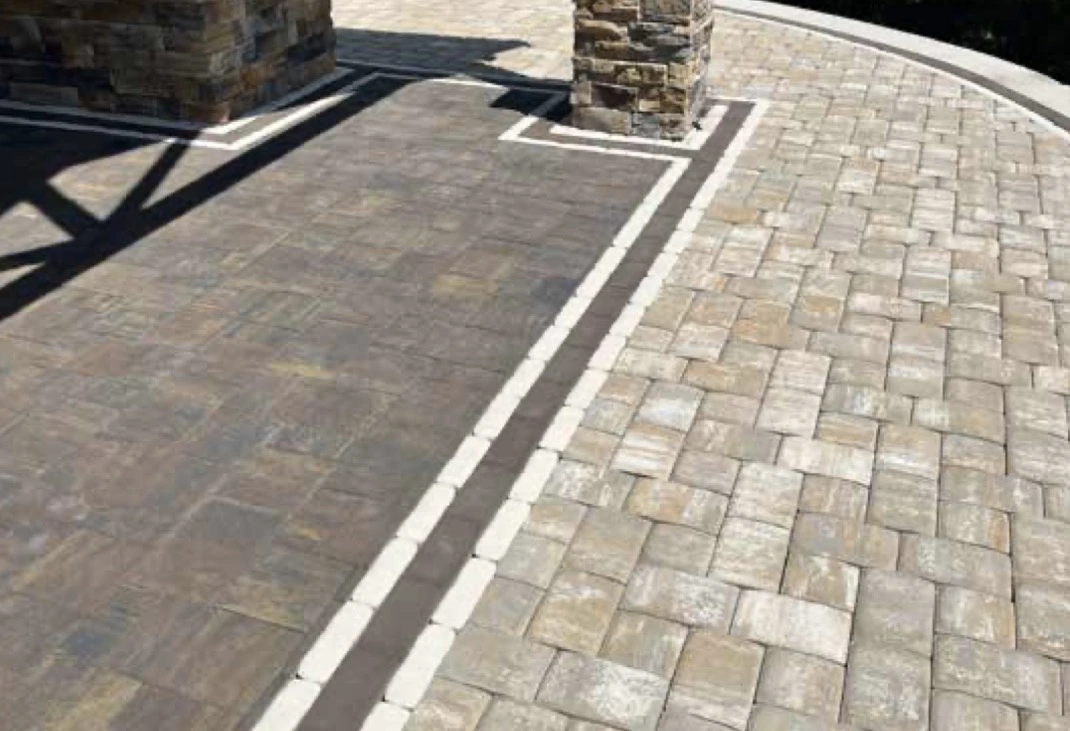
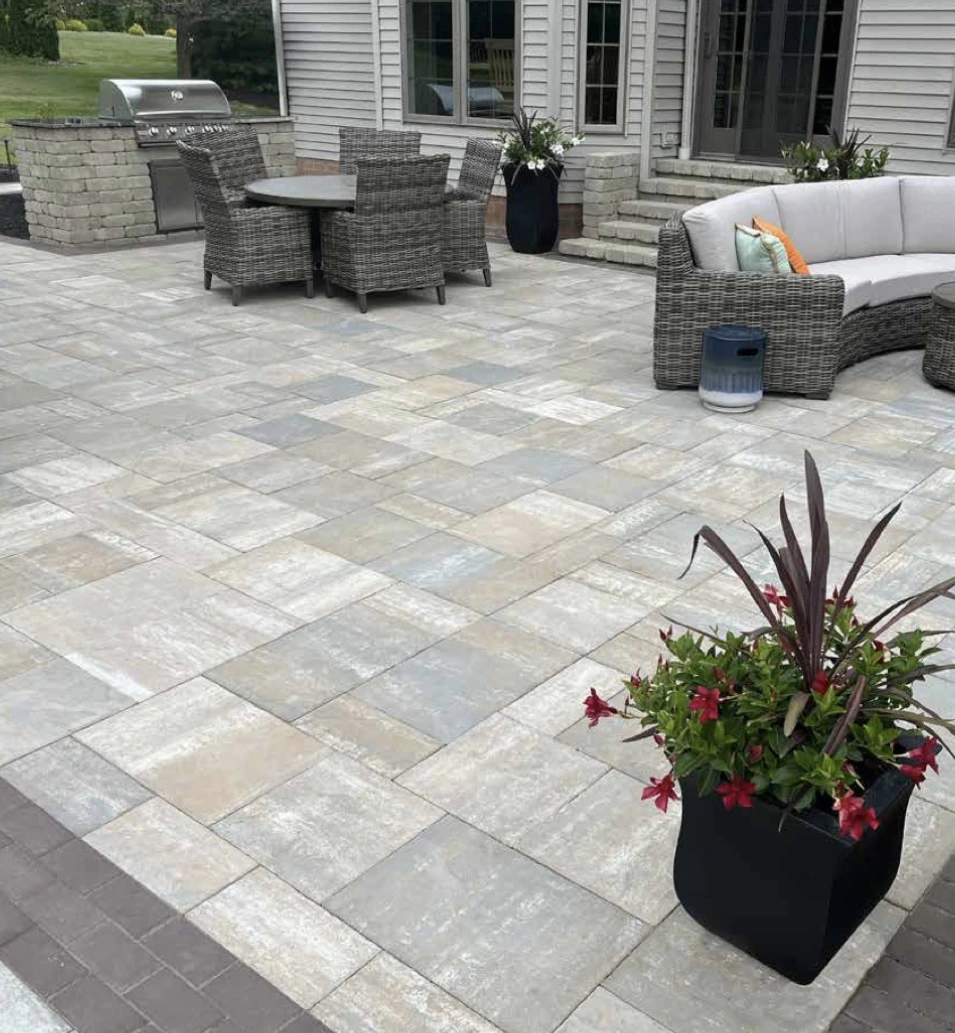
Paver patios and walkways. Pavers are a dry-laid system for most residential applications, which means they are less temperature-dependent than poured concrete. Our hardscape and paver selection covers a range of colors, textures, and thicknesses for patios, walkways, driveways, and pool surrounds.
Retaining walls. Interlocking retaining wall blocks handle both decorative garden walls and structural applications. Fall is a good time to address erosion you noticed over the summer, before winter runoff makes it worse.
Fire pits and outdoor features. This is the one project you can genuinely enjoy the week it is finished. A fire pit built in October gets used in October. Most kits are DIY-friendly and go together in a weekend.
Natural stone. Flagstone, edging stone, and decorative rock work for pathways, steps, garden borders, and rustic walls. Every piece is different, which is exactly the appeal.
Structural work using concrete masonry blocks also belongs on this list, particularly foundations for outdoor kitchens, sheds, and garage pads.
Materials Matter More Than You Think
Freeze and thaw cycles are the defining stress on hardscaping in this region. Water gets into pores and joints, freezes, expands, and works material apart. Over enough winters, low-quality pavers spall, cheap block cracks, and joints open up.
Products rated for our climate are manufactured at densities and absorption rates that handle that cycling. When you are comparing prices, that specification is where the difference usually lives. It is not visible on the pallet, but it shows up in year five.
If you are not sure what a project calls for, bring your dimensions and a photo. Our staff at both locations works with contractors and homeowners on this every day, and we will help you figure out quantities and the right product for the application.
Serving Parkersburg, Marietta, and the Surrounding Communities
Pioneer Masonry Supply has supplied concrete and masonry products across the Mid Ohio Valley for more than forty years. Our Parkersburg store at 1400 Blizzard Dr serves Parkersburg, Williamstown, and Ripley. Our Marietta store at 220 Acme St serves Marietta, Athens, and the surrounding communities on the Ohio side. We are locally owned and female-owned, and we take the time to get your order right.
Frequently Asked Questions
Can you lay pavers in the fall?
Yes. Fall is one of the best times to lay pavers. Cooler temperatures and drier soil make base compaction and jointing more reliable than in spring or mid-summer. The main limit is frost. As long as the ground is not frozen and you can compact the base to proper density, fall installation works well and often produces a better result than a summer install.
How late in the year can I pour concrete or lay block in Ohio and West Virginia?
For most residential projects, plan to finish mortar and concrete work before sustained freezing temperatures set in, typically by early to mid-November in our area. Cold-weather techniques exist, but they add cost and complexity. If your timeline is tight, dry-laid paver work gives you more flexibility than mortared masonry.
Do I need a permit for a retaining wall?
It depends on height and location, and requirements differ between Wood County, WV and Washington County, OH. Many jurisdictions require engineering and permitting for walls above a certain height, often four feet. Check with your local building department before you order material, and let us know the wall height so we can recommend the right block system.
Start Your Project While the Weather Is With You
Stop by our Parkersburg store at 1400 Blizzard Dr or call 304-422-4050, or visit our Marietta store at 220 Acme St or call 740-373-1133. Bring your measurements, and we will help you build a materials list that fits the project and the season. You can also browse our full product range to start planning.